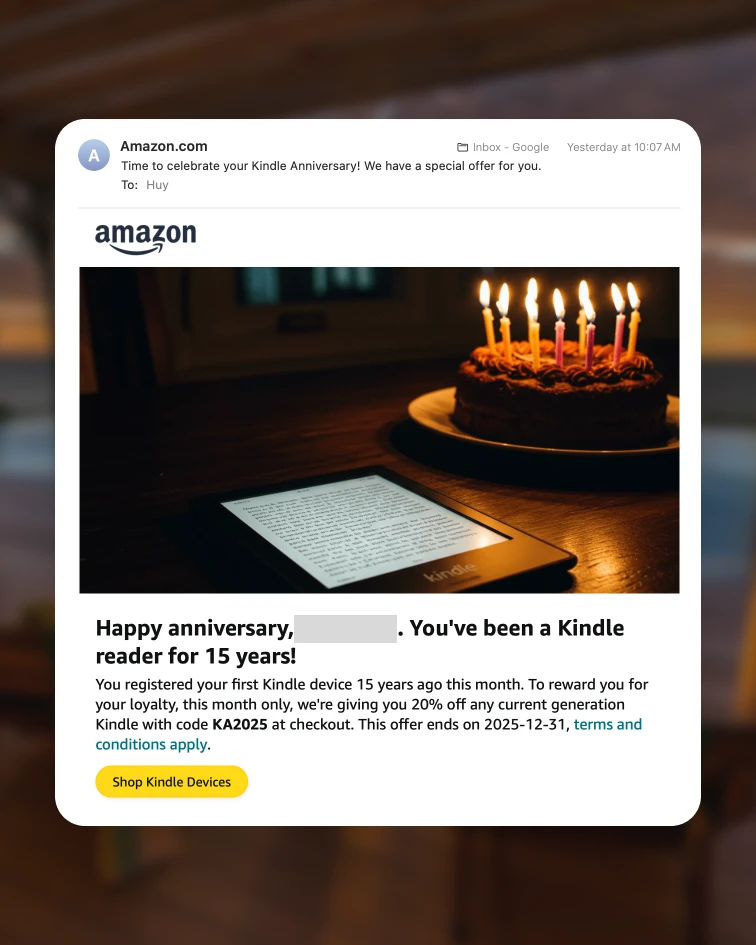
A friendly reminder from Amazon. 15 years 🤯
For me, people who still use physical books these days
fall into one of two categories:
1. Entertainment / Consumption
- They see the paper book as part of the overall experience: consuming it more like an art product, a piece of UX, or entertainment. The feel of the paper, the smell, the weight… all enhance the experience.
- But compared to humanity’s vast library, most works don’t fall into this category. And the UX issue can always be improved.
- There are many types of people in this group:
- from artists
- to Instagram influencers trying to look intellectual
- to aristocrat wannabes
- book snobs
- or even preppers getting ready for the apocalypse when there’s no electricity to charge an e-reader (okay, that last one is a valid case; I do collect a few paper books for that reason…).
2. Lack of Experience
- These are the people who stand to benefit the most from e-books (thin and light, search, AI, sync, disposability, dictionary, quick wiki/web search…) but are completely unaware, misunderstand, or are technologically outdated.
- It’s the classic problem of the unknown unknown. Frankly, I pity these people.
- As for the argument that reading books isn’t necessary anymore, that you can get knowledge from TikTok, blogs, audiobooks, or podcasts, I’ll save that for another post, where I’ll discuss what is truly unique about books in general.
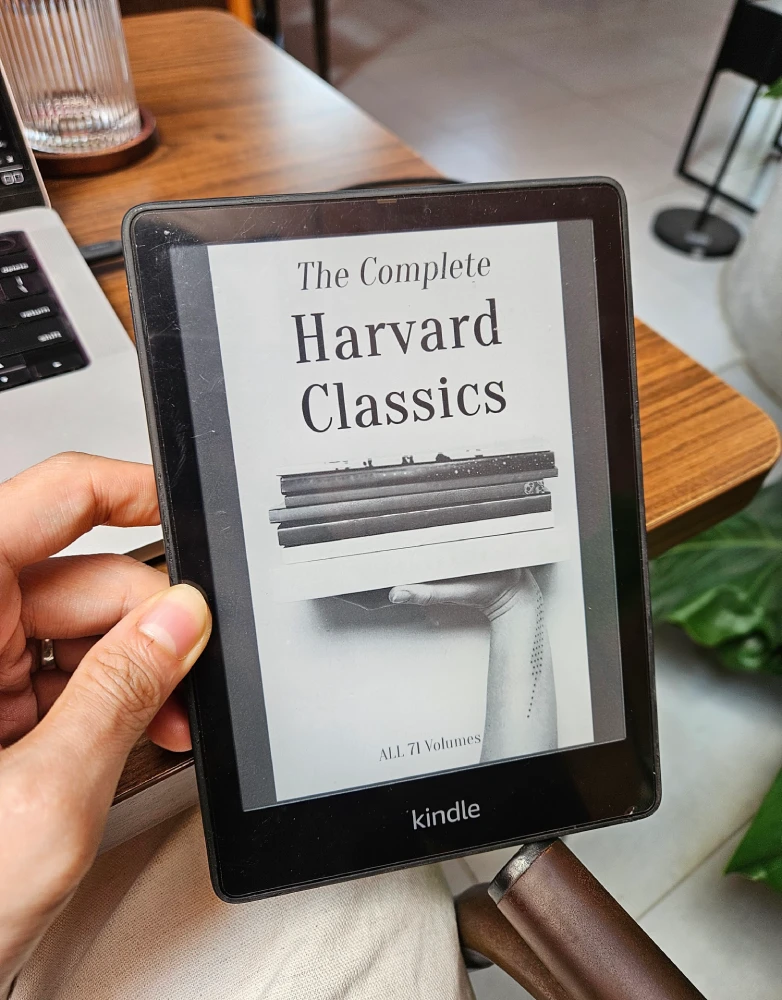
My beautiful companion 😍😍
So, what is the most effective way to read these days?
For me:
- Get an e-ink reader (Kindle, Kobo, Boox…). Even an old one is fine; you can find them for cheap starting at around $20 USD 😆. I personally use the Kindle Paperwhite 5 Signature Edition (image above). At one point I tried reading on an iPad for a year, didn’t work at all (an intense level of distraction; too heavy, too large).
- Where to find books: Classic literature (which is still great and not outdated) is mostly free or super cheap on the stores available in the e-readers. Plus, I both buy and sideload the external epub files I need (how you acquire them is your business 🤫).
- I read multiple books simultaneously. Usually, one book takes up 80% of my reading time, and the others take up the remaining 20%. I typically pair fiction and non-fiction.
- Every time I start a new book, I start a dedicated note in my Knowledge Vault (Obsidian). I put the highlights from the book directly into this note and write my own commentary right there. At the same time, I link these highlights with other related notes. I absolutely avoid automating highlight management (e.g., Readwise). Why I do this, I’ll probably write about in another extensive post, but it’s similar to how I want to encourage gym-like mind training.
- Depending on the complexity of the book, I’ll read during different time slots. But these are frequently used:
- In bed before sleep
- While waiting in line for X (airport, bus)
- While the AI is running a task
- Grocery shopping with my wife, where my only job is pushing the cart, so I push and read
- Or, if a book is too difficult, I’ll schedule separate time slots just to consume it…
- Currently reading: Hebrew Bible: Jeremiah. My favorite recent book: Knowledge by Jennifer Nagel (on epistemology).
I read entirely by choice, with no one forcing me, but if anyone needs a support group for reading, leave a comment. Just a warning: if you read paper books, or scroll TikTok, I won’t help you though 😆.
Google Gemini 2.5 Flash provided help with the English translation.