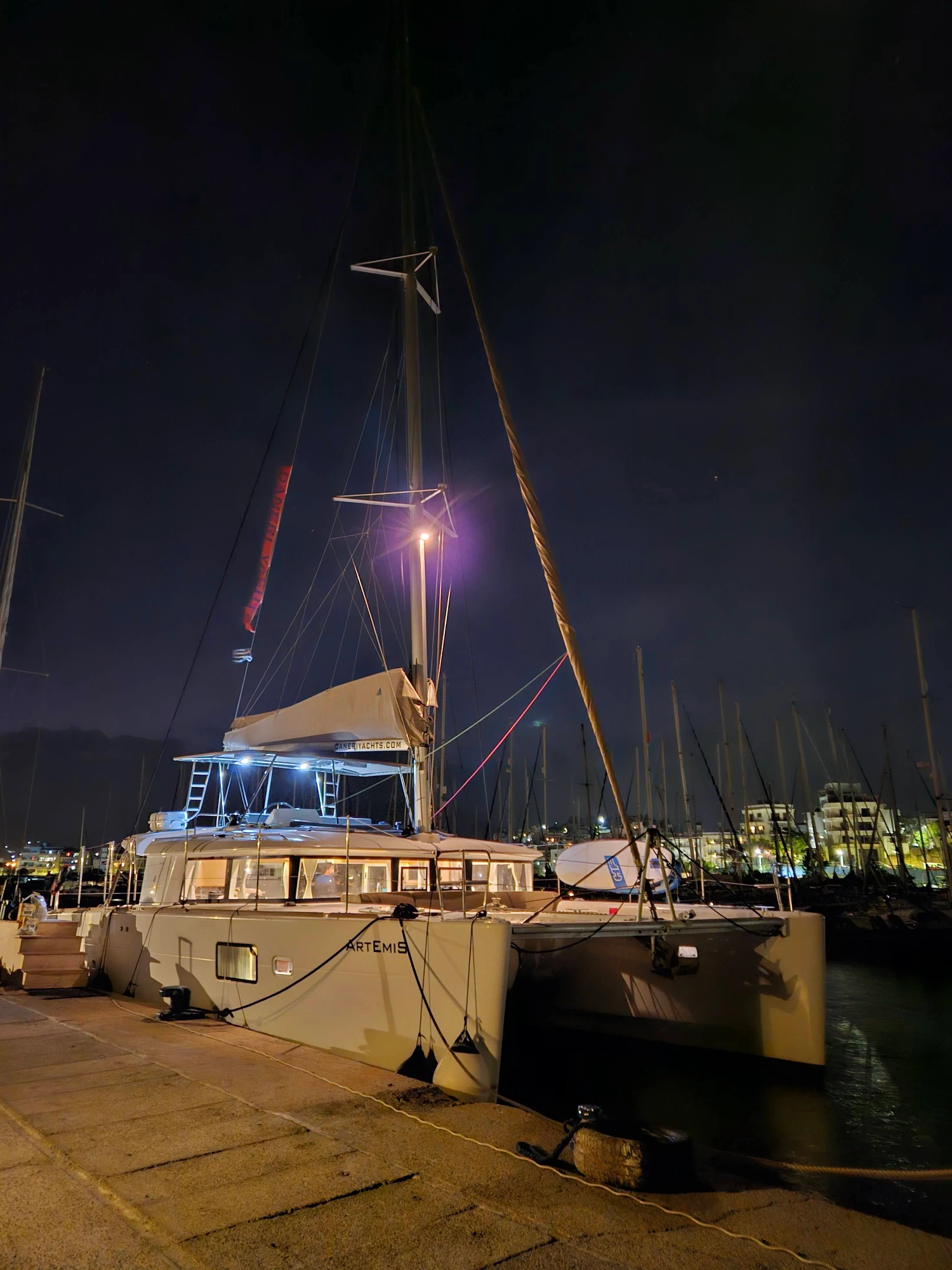
The Artemis Lagoon 450F
Key lessons learned:
1. The Best Part: How to pilot a boat to prevent passenger seasickness
- The sea was moderately rough that day, with fairly strong winds.
- What you have to do when hitting a large wave:
- Go at a 45-degree angle relative to hitting it head-on (to prevent the wave from hitting the side at 90 degrees, which could cause a flip, and avoid 0 degrees, which causes violent, nausea-inducing pitching).
- Right before hitting the wave, you quickly turn the wheel to let the bow cut straight into it (to reduce the force on the side of the boat as much as possible), then immediately turn back to 45 degrees (so the boat continues to descend gently, avoiding vomiting).
- I failed at this about 3 times, usually messing up the 0 and 90-degree angles, and I heard the screams of my friends in the cabin below. Most of this failure stemmed from a failure to:
2. Spot strong waves from afar
- Even after two hours of training, I still found it difficult. In general, you need to keep your attention 2/3 of the time looking forward for orientation, and 1/3 of the time watching the direction the waves are coming from (the wind direction), so you can turn when needed.
- Once I started to be able to “read” the waves, I suddenly realized: a patch of sea can hold an incredible amount of information, as long as you know how to read it.
3. Guessing wind speed based on whitecaps
- According to the captain, he just needs one glance to know if the sea is dangerous or not.
- It seems that whitecaps start appearing when the sea is moderately rough, because the water is bobbing high enough for the wind to froth the tips.
- That day, whitecaps were appearing far out at sea.
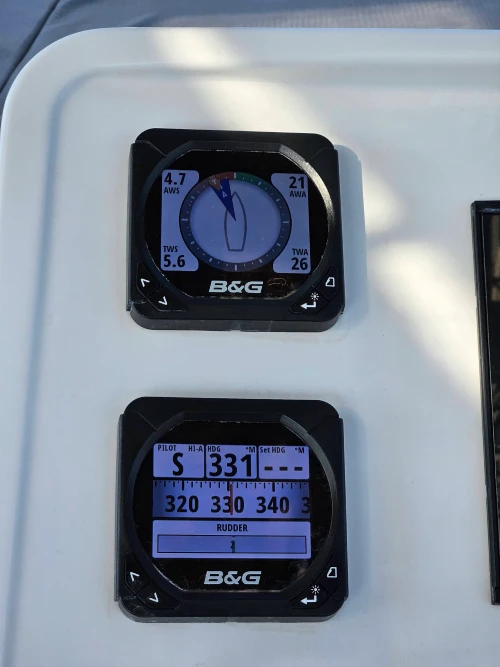
4. True Wind and Apparent Wind, and turning
- True wind is the speed and direction of the wind at the boat’s location.
- Apparent wind is the speed and direction of the wind actually affecting the boat, especially the sail.
- There is almost always a way to catch the wind and move, unless the wind is blowing directly from the bow (the dead zone).
- When turning left/right without using the engine, you need to speed up the boat quickly using the wind’s power first, and only then turn the wheel. After that, you must quickly adjust the sails so the wind pushes the boat in the correct direction.
5. Avoiding seasickness for yourself
- When the boat is pitching, try to orient your body with the boat instead of trying to orient yourself to the outside world. Over time, if you get used to the boat’s space, you’ll feel a lot less disoriented.
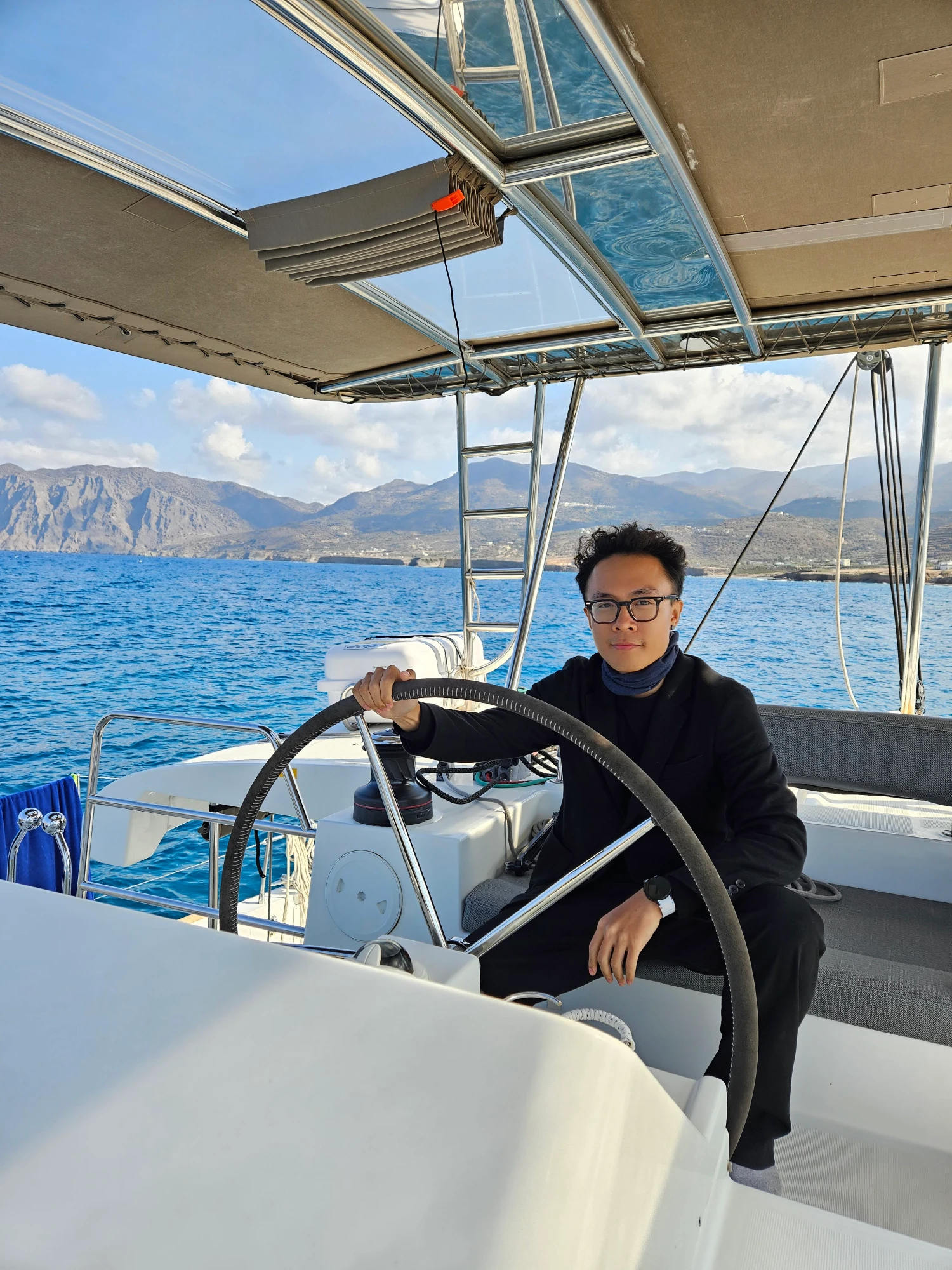
- Plus, the act of steering the boat makes that feeling disappear entirely. After a while, I could feel how the boat responded to my controls; me and the boat became one…
That’s my sailing CV right there. If anyone has a boat, I’m applying to be your pilot. 🛥️😂
Google Gemini 2.5 Flash provided help with the English translation.